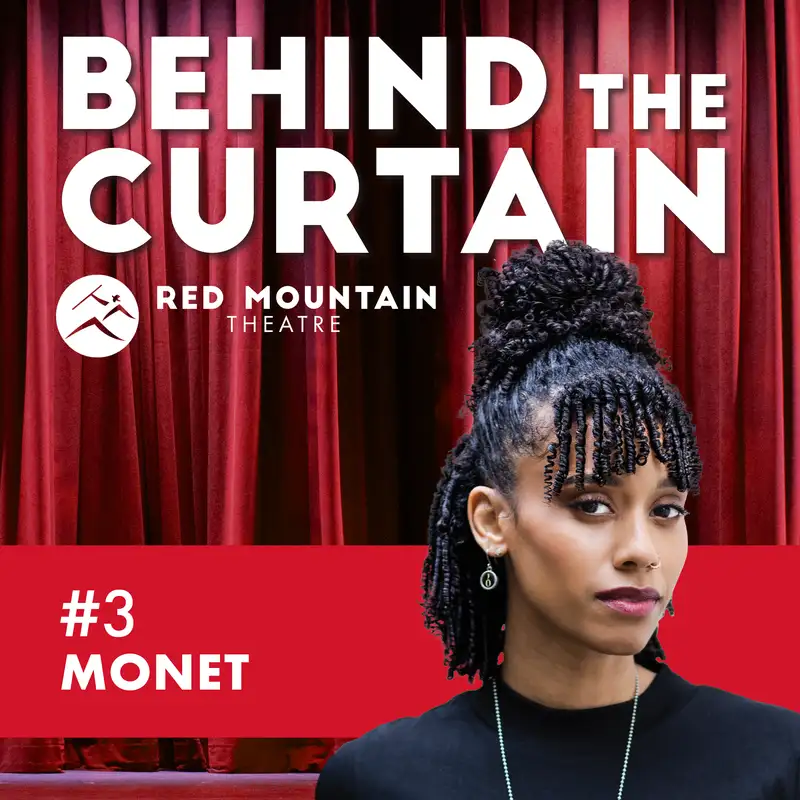
Ep. 3 - MONET
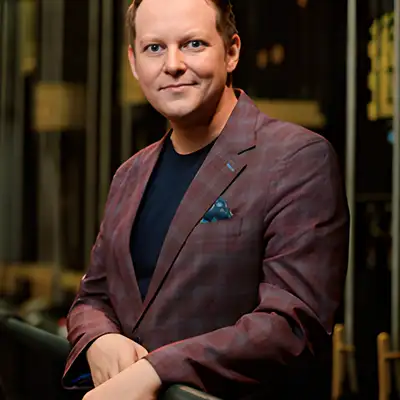
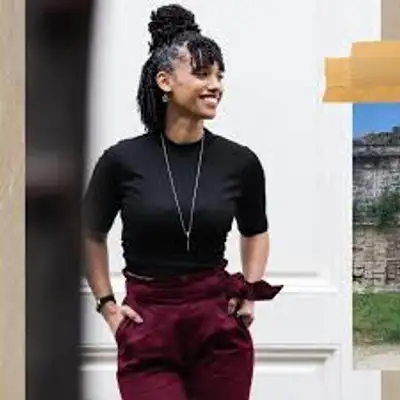
Download MP3Welcome to Behind the Curtain at RMT. I'm your host, Roy Leitner, and this episode features a conversation with the director of The Wiz, Monet. Hi, Monet. Thank you for being here. Just have to first say that I am so thankful that you are back and that you are directing this version of The Wiz, and we will get to all things Wiz soon.
ROY:But your presence here and what you do for this community and the artists that have come to know you is pretty unmatched and it just means the world to me. So I really want you to know that. And whether that's on the podcast or not, I don't care.
MONET:Thank you.
ROY:So Monet, how did you get to this chair? Like how on earth did you go from, I know a little bit, you told me a little bit, but will you tell the people listening, like how you found theater and then all of that kind of stuff and sort of your think history.
MONET:Theater was bestowed upon me. You know what I mean? Yeah. I grew up just a little bullied nerd like most theater people, but like for me, it was because I was really a nerd. Like Same.
MONET:Honor roll, like science club, like brain brawl team. Like, was on the brain brawl team where you, like, answered questions about Mark Twain with buzzers. Like, I was in there. And I had done choir because I had a family dynamic where I couldn't do any after school anything. And the choir was your elective and you had to have an elective.
MONET:And so, I could sing well enough. I went to, like, Allstate. It was a whole thing. And my school was doing Little Shop of Horrors. And I was in a predominantly, you know, white forward school.
MONET:And they were like, you, get over here. We're doing Little Shop of Horrors. And I was like, I don't do that. I don't do the theater. I'm not an actor.
MONET:And they were like, all you gotta do is sing and sway. And I was like, I'm in there. That? I can do that. And I just am of the belief that if you stumble upon x y or z musical as your your gateway, that's it.
MONET:You do musicals forever. And I think a little shop if it's one of those musicals, it's just too fun. It's too fun.
ROY:You're 100% right.
MONET:It's like
ROY:Everyone can point back to that one musical that like opened the door that and now this is
MONET:It's over. You do this forever. Like you get a Little Shop. And then the the second show I did that summer, was West Side Story.
ROY:That was my second show ever too.
MONET:Like a nail in the coffin. Yeah.
ROY:It's over.
MONET:I'm never doing anything else again. Like, once you hear those orchestrations, it's like, even if it's like a piano
ROY:Right.
MONET:And like one violin. Right? Like
ROY:And they're trying real hard.
MONET:Like a three piece percussion. Like, it's just they're trying so hard. Yep. So even that score is so brilliant that even in its most poor man's version, you're just like, it's the most magical thing I've ever heard.
ROY:I truly believe the Tonight quintet is probably one of the best things ever written in musical theater.
MONET:Oh, it's incredible. Now learning it is godspeed to everybody.
ROY:Right.
MONET:Like and I hope you can count. I hope you can count.
ROY:Really well.
MONET:Like and then children doing it. Oh, god bless every person that, like, has taught the quartet to children who are 15 to 18. But, yeah, it was just really it was really incredible. And, you know, my parents weren't super involved. And so secretly a gift because then nobody I just was like, I'm changing my entire life trajectory.
MONET:Like, I was in the law club. Like, I was just doing all of this extra, you know, nerdy curricular things. I was in AP computer science. I was computer coding. And then all of a sudden I was like, I do this forever now.
MONET:Like I need tap shoes and I'm I'm going to school for musical theater and no one stopped me.
ROY:That's amazing. And so where'd you go to school?
MONET:I went to Forest School of the Arts first. And then I went to, an associate's in musical theater there. And then I went to Marshall University and got my bachelor's, in fine arts and acting because I thought I was gonna stop singing. And then, you know, I I I just felt like there was more work I could do and I I felt like I wanted to have a chance to compete at a really high level. And so I went to grad school, and I got my MFA acting.
MONET:And then my first audition in New York was for the Book of Mormon. And I was like, I guess I'm singing again.
ROY:Yeah. So tell me all the things that you it's like creative consulting, script doctoring. Yeah. Oh, tell me the things you can tell me.
MONET:Oh, I can, I can, I can tell you what I'm doing? I just can't tell you what it
ROY:is. Okay, great.
MONET:Perfect. Sometimes I can tell you what it is. Yeah. So I am very multi hyphenate, but I like to put a qualifier in that because I think that there's an idea about what multi hyphenate is. And I like to invite people to think about it a little more holistically.
MONET:Like, I wear a lot of titles, but I do the same thing everywhere. All I'm doing is storytelling, and I'm problem solving. So everywhere, I'm just storytelling. I'm just problem solving. And then somebody gives me whatever title they want me to have in their space that helps the space work well.
MONET:So I'm a director and I'm a writer, but most of my writing is in service of others. So I script doctor. I ghostwrite. So which just means for the people who don't know that magical job exists, is people have work that's in development or is reaching a point where they just needed a fresh set of eyes or, you know, there's been changes made on the project and they want somebody to look at it. And so I just kind of go in and and give advice.
MONET:Sometimes I go in and rewrite it, like actually rewrite it. And then I'm also a creative consultant for, some really wonderful people. And that usually means that, a client has a bunch of verticals in their life. They do TV. They do film.
MONET:They do talks. They do all of these things. And those things kind of just pass through me, and I advise on them. I make a lot of pitch decks in my life. I write a lot of treatments.
MONET:And then I'm a producer as well.
ROY:So where are you, where are you finding I mean, all of these things are are storytelling for sure. Where do you, where are you find, where are you finding your joy? And also that's a lot of output. Yeah. Like, how are you finding joy and finding ways to fill your creative cup?
ROY:Because as someone who's me is expected to produce a lot of creative stuff, sometimes I'm like, you know, the deadline's coming and we're going to make something up and it's going to happen and all that kind of stuff, but in order to sort of fill that cup and How do you navigate all that?
MONET:Yeah. I think that I I try to manage my energy tokens well. I like to tell my mentees a lot, it's like you have 10 energy tokens a day. You have to be very mindful of how you spend them. That lesson usually comes into play when they have their like first heartbreak and they're like spiraling and I'm like, you're spending like five energy tokens on this a day and now you don't have anything left to kind of focus.
MONET:So I try to be mindful about prioritizing my output and mindful about, you know, when I'm about the measure of, like, burnout. I also it's it's easy to fill my cup because I only work with people I want to work with. I really tried to be mindful when I first moved to New York about keeping my overhead low, about how much money I was spending. Like, I try to live humbly so that I can, be useful creatively. So I try although we all stress about money all of the time, I tried to be I tried to be smart in the early years about how I set up my life so that I could say no to jobs I didn't wanna take because I think output on a gig in an environment that you don't like will drain you in ways that you don't realize.
ROY:It's way more than 10 energy tokens.
MONET:Way more than 10 energy tokens. And so the people I work with, I adore. And so, you know, I recently got an ask for a gig and they were like trying to sell me on it. And I was like, it's already I'm it's a yes. I have no it's no problem because of the people who are involved in it.
MONET:I was like, yeah, I'll do any yeah. Absolutely no problem. Just tell me when you need me.
ROY:I'm curious. So when a clown like me calls you up and is like, hey, please come back. And I'd love for you to take your swing at The Wiz. What made you say yes?
MONET:I mean, Wiz is to me just such a exciting piece of history. You know, I I chose to do theater and I am a young, you know, ish black woman in the world. And, you know, those things that came before you that, like, made the first steps on the moon, do you know what I mean, are really special. So to to get a chance to even try to pay respect to it is is a is a wonderful opportunity. You just don't get those all the time.
MONET:And there's a sense of, you know, anytime I do any I get to even touch any sort of black art. It's always historical. And because of the oppression of us as a people in general, but the lack of opportunity to make things that can last. And, you know, early on, you're touching, like, I guess, August Wilson is the first piece, you know, that you'll you'll touch early on as a black artist. And then you kinda don't really get anything for a while.
MONET:You're doing as as especially when you're in college and things like that. You just don't really get to there's not a lot and there's not a lot of us. And so then we're not doing a lot of that anyways. And I think that in in lies the the second easy yes is because then I get to come here and a bunch of younger black artists get to do the Wiz. You know what I mean?
MONET:And so I just find that to be special and important. And so it's an easy yes. It's scary yes because The Wiz is when you say take a swing, well, people have been taking a few swings at Wiz. You know? And even in its in its early days, you know, it was on Broadway and then they brought it back and then they did the tour and then you know?
MONET:And so we've taken some swings at The Wiz. And so I'm like, as a director, you're like, okay. Let me see what I can do.
ROY:Well, and I'm I have been just in awe and so excited with what you've been creating. So would you talk a little bit about sort of your point of view of how you approach the material and where this production is going and why you've made the choices you you made for this I
MONET:think that like when I first started to think about it for our production, I just was like, alright. So what do we why why are we doing the Wiz? Why do we do the Wiz? And I and I think the I like to think, you know, because I haven't talked to the people. You know, I like to think the first time we were like, we're gonna do The Wiz and and they started to build that, it's just so clear that there was a lot of nod to black culture and even the diaspora in that original piece.
MONET:And so when I look at that celebration and those nods throughout the piece, and then we're gonna revive it. So we're gonna do it again and we're gonna do it today and we're gonna do it forty years later. Is that right?
ROY:That's a
MONET:lot of time. Years? Years later. Was like, I wasn't born yet. Yeah.
MONET:Fifty. If we're gonna do it later, then like how then then if we were gonna make it the first time today, what would we celebrate? Like what would the nods be? And so I just kind of operated from that place, and I just started to think about, you know, the cultural things that I love the most. And, well, when I can, it's always the late nineties, early two thousands.
MONET:Always. It's the best. This is the best time. So I operated from that place. It's always Afrofuturistic, this piece.
MONET:And so it I I sold the design team on an afro futuristic nineties, early two thousands inspired Wiz, and they really delivered. It's really exciting. The colors, the costumes, just lots of hip hop culture all throughout that, which is always exciting because, you know, it's a fantastical world and it will feel that way. But for those people in the audience, who are black, you'll see thing they'll they'll see different things. And for everybody who loved the nineties, it's like our tin man has a disc van and a vinyl as his axe.
MONET:And you're just like, what's going on? I don't know, but I love it. And so, you know, getting to celebrate those things and then watching Malik work,
ROY:Who's the choreographer?
MONET:Who's the choreographer. And, you know, he is steeped in knowledge of all dance aesthetics. But being who he is, his knowledge of the evolution of black social dance is incredible beyond words. And so, you know, sometimes I I and he tries to stop and and explain sometimes, but I don't even think the company realizes how much is pulsating through that choreography. And so it's just such a beautiful, exciting opportunity to kind of celebrate that.
MONET:And so in that, I feel like we're honoring the intent of why The Wiz.
ROY:I love that. Could you talk a little bit about your collaboration with costume design? Yeah. Yeah.
MONET:Twyla's incredible. Our costume designer, she's so talented. It's crazy. It's just so talented. It's bizarre.
MONET:Like, I just I'm like, I do I just am so I make things out of nowhere, but I don't I don't know. Designer I just find it to be the most magical thing in the
ROY:whole She's knocking this out of the park.
MONET:She sent me her first sketches, and I was like, I don't even understand. And we kind of and I talked her through, you know, the the overall vision over the phone. And then I had made just kind of a mood board of by character. I was like, it's this world. And so, you know, when you see the designs, there's like a picture from immature that I was really obsessed with and, this hat from clueless.
MONET:And in in the collab battle, like, you'll see them wear these costumes that if you know, you know. Like, I was like, can we please just give an homage to Crisscross somewhere? And so you'll see these backward pants. I like, yes. Crisscross lives on.
MONET:Like like, I need to test.
ROY:Jump. Jump. Correct. Like,
MONET:please, forever. So she really has this this incredible cohesive design for the world and and really leaned in to all of these. It's like there were, like, all these Janelle Monae photos and, like, Mary j Blige and TLC. Like, there's just we had all of this inspiration, and she just can digest that and turn out a design that would just blow your mind. You know, the munchkins, I was like, just nineties color, just nineties funk.
MONET:Like, how can we, like, make our own world? But what if, you know, all fashion is just recycled. Right? It's like we're just, like, recycling a decade. Like, so nineties fashion is kind of coming back.
ROY:Mhmm. And
MONET:it's a little jarring. I was like, I don't know. You should have asked us first. We would have told you what to pick. I feel like I feel like you guys are picking the wrong things.
MONET:So, you know, it's all kind of recycled. And so it's kind of cool to think about, you know, like a two thousand years in the future and they're just like recycling the nineties. It's kind of how I think about it when I look at it. And so that was really exciting just to to see how she manifested those kind of images in the design. It's the cool it's some of the coolest stuff I've ever seen, honestly.
MONET:I can't lie.
ROY:I'm so I'm I'm really excited for people to see it. It's wild. And then could you talk a little bit about your ideas around Scenic and working with Kim to create the more of the visual world because the way that the play is structured isn't the most helpful.
MONET:Not too friendly. Not too friendly. If anybody who made the wiz is out there and wants to give us some transition music, it'd be great. No, it's just, it's so interesting. You know, we're reviving something that was just made in a different time, in a different aesthetic.
MONET:And so the transitions and also I always make fun of everything we make on Broadway because we never make it thinking that somebody else is gonna make it after us. And we have all the dollars and coins. And then people are like, how did they get this couch on stage? And it's like, well, automation, babes.
ROY:It just came up from the It
MONET:just came up from the ground or flew in from the sky. Right. And so then you get a piece and you're like, all right, well how do we move from place to place? And the whiz is just moving from place to place. And just as a director, it's like, I'm not really a I'm very much a if you can't fix it, feature it because I would like to spend the time focusing on the story.
MONET:I don't wanna argue with how we get to the next spot in the world when they're not really dramaturgically necessary. You know, the the play isn't such where like, we're in a courtroom. Like it's not, you know, we don't need the space as much as we need the characters. And so in talking to Kim, which, you know, to her credit at first, she was like, wait, what do you want to do? I was like, I don't even care.
MONET:We're just gonna say we're here. And she was like, okay, but like, how do they know? Was like, they know. And so so what I had asked her for originally was a set that has core pieces that we can just spin around and we're somewhere else. And they just kind of nod to this new place because in the Wiz, we kind of just say some lines and then we go, wanna hear it?
MONET:Here we go. And then we sing a song. And then we move to another place. So I don't even stay anywhere long enough where the audience actually needs to be like, this is where we are.
ROY:Right.
MONET:It's more like this is who we are. This is where we found ourselves. This is the environment that we're in. And so, you know, we talked through what that might be like and Kim just made these really interesting pieces that we're just gonna spin around and be in a new place. That does require me to lean on John, our lighting designer, a bit.
MONET:But I think that costumes and the set and the lights and everything, Malik and I have done, we're really gonna it's really gonna move well. And I'm excited to have tackled that challenge in this way. And I'm excited to look at it in this way. And I and I think the audience is gonna really be on board.
ROY:So for folks that are interested in possibly dipping their toe, cannonballing into this industry, what would you would you tell them?
MONET:I mean, my first thing I usually say is find out why. Otherwise, if you don't know why you're doing it, it can be because it's challenging. It can just kind of make a, it can mess with your spirit a bit if you don't know why you're doing it. Because there's a lot of what people like to call rejection, which I'm just like, there's just you do you am am I of service to the space? Am I helpful to the space?
MONET:And then somebody's like, you're actually someone else is more helpful. Great. I don't need to be anywhere. I'm not helpful to this space. You know what I mean?
MONET:Rejection's hard for me, but if you know why you're doing it, then like you just know where to put the next foot in front of yourself. And I think that that's really all you can do because you just never know where your career is going to go. And I think that a level of of care and integrity for the work is important. It's really about, like, your guideposts. If you can keep if you know why you're doing it and what's nonnegotiable for you and what your morals are, the why will get you into, down the paths with the right people who kinda vibrate at your frequency.
MONET:You know what I mean? Sometimes I meet young artists and I'll do like a for my first college, I used to do these, like, mock interviews. And I would ask them what they like about being an actor. And I just try to listen very intently because asking them what they like is asking them why they do it. And then sometimes I would have to I would have to go out on a limb and kinda rock people's world because in listening, I would discover, was like, oh no.
MONET:Oh, babes, you don't actually like anything about acting.
ROY:Right.
MONET:I was like, I know I just asked you why you like acting. I I don't think you like acting. I was like, I think you like dramaturgy Or like people sometimes would like talk about making it and like how cool it is that like the set design happens and the costumes happen. And I was like, oh, I think you might be a producer. Like, you know what I mean?
MONET:Like, when you figure out why you do it, you can get closer to how you can be, how your gifts can greatest serve it, and then you're always in the right places. So I think that constant investigation, is just always helpful because possibilities are, like, endless. You know? I went and did, the Hell's Kitchen had a segment on The Voice and I went out and directed that and, it was wild. And there was a moment where I was like, do I need to just work in this space?
MONET:Like, is this where I'm supposed to be? And you just kind of have to be open and and and looking around at at what feels right, because it is challenging and it's hard to make a living in it. And so you have to be feel good about your choices.
ROY:Well, now I'm gonna give you six we're gonna put on our headphones.
MONET:Oh, oh, okay.
ROY:We're gonna do first, we're gonna start with a sixty second rapid fire question situation where I'm gonna this is so we know. We say stop. Okay. Are you ready?
MONET:I'm scared.
ROY:You got this. Sixty seconds rapid fire. Okay. What do you do on your day off?
MONET:Watch Bob Burgers. Bob's Burgers.
ROY:If you go anywhere on vacation, where would it be?
MONET:Jamaica.
ROY:Coffee or tea?
MONET:Coffee.
ROY:Favorite animal? Raccoon. Biggest pet peeve?
MONET:Oh, people who smoke and walk on the sidewalk.
ROY:Favorite superhero?
MONET:Batman.
ROY:Text or call?
MONET:Call.
ROY:What job would you be really bad at?
MONET:Telemarketing.
ROY:Favorite TV show?
MONET:Oh, I don't know. I Bob's Burgers, obviously.
ROY:Toilet paper over or under? Over. Thank you. Favorite drink?
MONET:It's in the patent. Water.
ROY:Chocolate or vanilla?
MONET:Chocolate.
ROY:Elevator, small talk, or awkward silence?
MONET:Awkward silence.
ROY:Favorite number?
MONET:7.
ROY:Gold or silver? Gold. You did great. You did great. Thank you for being here.
MONET:I really appreciate it. Thank you. Lovely.
Creators and Guests